
- Crispy Parmesan Garlic Aubergine (Zucchini) Sticks - Golden, garlicky, and impossibly crisp.
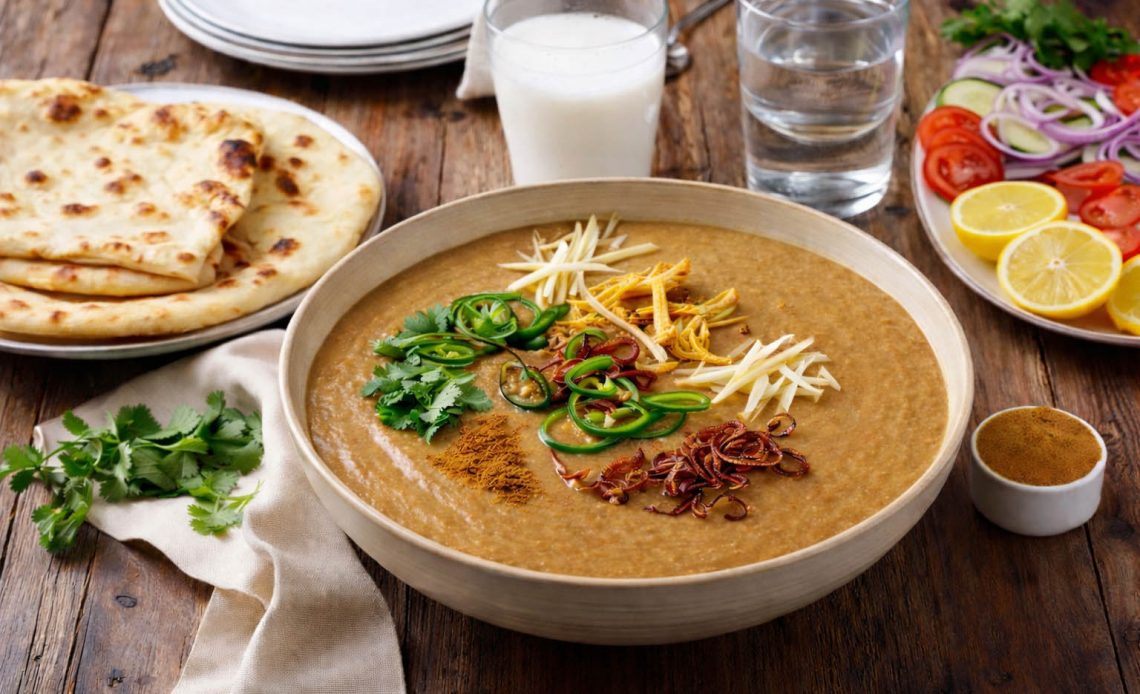
This Lahori-style Chicken Haleem is slow food at its most deliberate—deeply savoury, softly spiced, and built layer by layer until meat, grain, and lentils dissolve into one silken whole. Unlike shortcut versions, this haleem is not blended smooth, nor rushed with shortcuts. It is worked by hand, patiently broken down using a wooden ghota, the way it has been done for generations in Lahore homes.
Chicken haleem is all about balance and technique, not complicated ingredients. The grains and daals are cooked until soft enough to mash, then blended into a smooth base that becomes the backbone of the dish. That’s what gives haleem its signature body — not cream, not shortcuts, just properly cooked lentils and grains that break down into a thick, cohesive texture.
The second half is the masala: onions fried crisp and golden, then ginger and garlic cooked until the raw edge disappears. Tomatoes bring depth, green chillies bring lift, and the spices do what they’re supposed to do — warm the dish, not overpower it. Once the chicken is tender and shredded back into the pot, the real haleem begins: low heat, steady stirring, and time. This is where the pot transforms from “stew” into proper haleem.
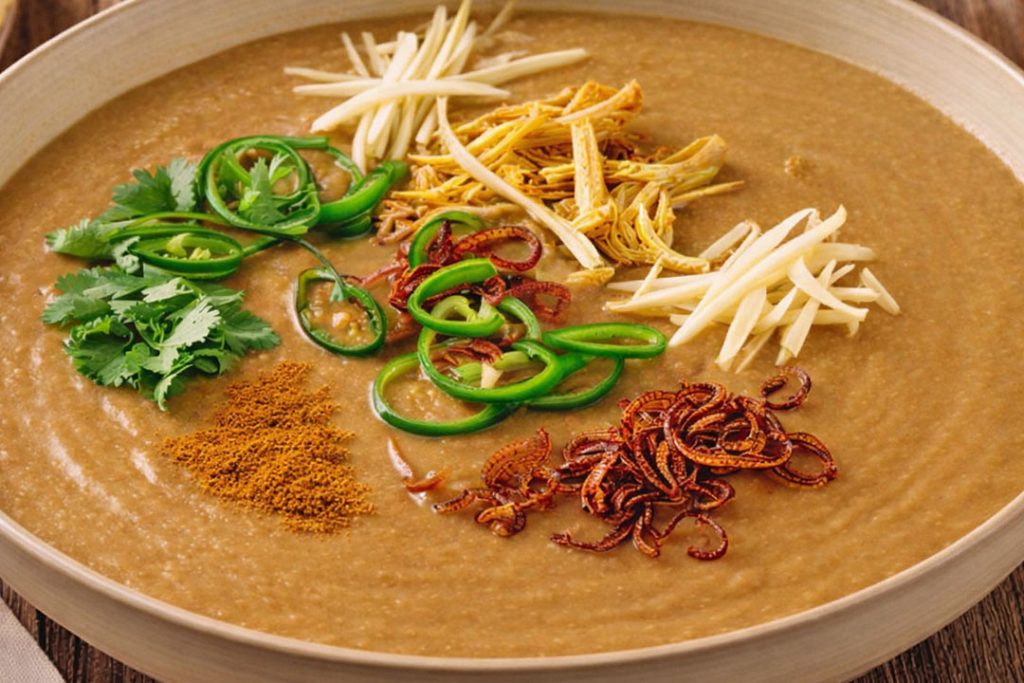
And the finishing matters more than people think. Adding half of your freshly ground spice mix at the end wakes everything up, while the garnish (lemon, chaat masala, ginger, coriander, chillies) turns each bowl into a full Lahori-style serving — tangy, spicy, and layered.
The Best Ingredients
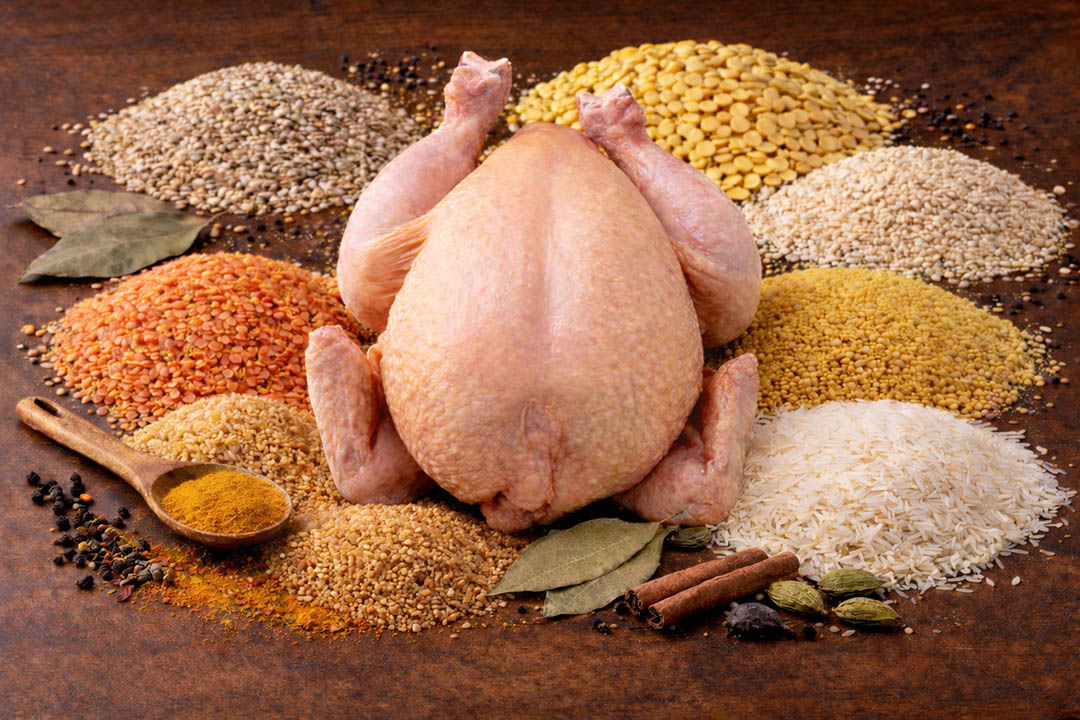
For the best result, your ingredient choices already do the heavy lifting. Pearl barley + bulgur + rice create body and elasticity, while the mix of chana daal, masoor, moong, and maash (urad) gives thickness and richness without the haleem tasting flat.
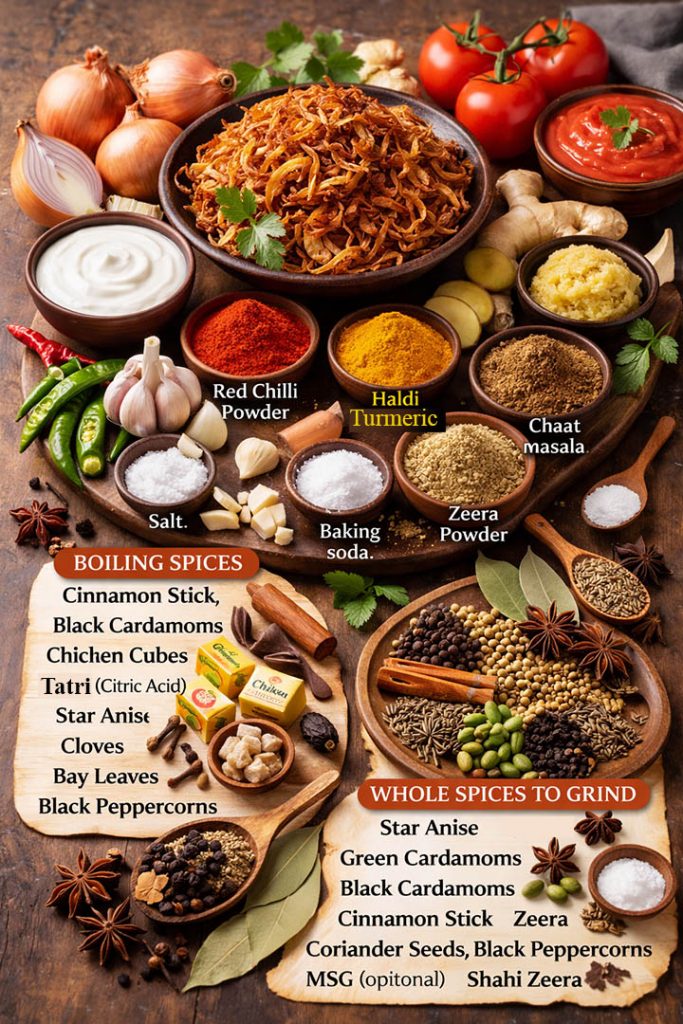
Your “boiling spices” are exactly right for traditional depth: cinnamon, black cardamom, cloves, bay, star anise, peppercorns — plus chicken cubes for that savoury backbone. The small touches (a little citric acid, a touch of baking soda, yogurt) help the mix soften and blend into that classic smoothness.
If you want real haleem texture, treat stirring like an ingredient — it’s what makes it thick, smooth, and properly “stretchy”.
👉 Despite its deeply layered flavour and rich texture, chicken haleem is surprisingly straightforward to make — a slow, gentle cooking process does most of the work, rewarding you with a comforting and incredibly delicious result.

- Chicken (1kg): High-protein and filling, supports satiety and muscle maintenance
- Mixed lentils + grains: High fibre, slow-release energy, and naturally thickening (no flour needed)
- Garlic + ginger: Traditional digestion-supportive aromatics, also build depth without heaviness
- Spice mix (whole-ground): Adds warmth and complexity without relying on excess salt
(Always adapt seasoning levels to personal dietary advice.)
- High-protein diets: Chicken + lentils make it very satisfying
- Filling recovery meals: Soft texture, energy-dense, easy to portion and reheat
- Family batch cooking: Freezes well and tastes even better the next day
- Carbohydrates: High
- Sugar: Low (no added sugar)
- Fat: Moderate (adjustable)
- Saturated fat: Low–Moderate (depends on oil/ghee used)
- Sodium: Moderate–High (adjustable — stock cubes + salt)
Nutritional Highlights (Clear & Honest)
Per Serving (Approximate, assuming 8 servings):
- Per Serving (Approximate, assuming 8 servings):
- Calories: ~450–650 kcal
- Protein: ~30–45 g
- Carbohydrates: ~45–70 g
- Fibre: High
- Total Fat: ~10–22 g (depends on oil/ghee used)
- Summary:
- High protein • High fibre • Energy-dense • Very filling • Great for meal prep)
Not Ideal For (Without Modification)
- Gluten-free diets: Bulgur is wheat (swap needed for GF)
- Low-carb diets: Haleem is grain-forward by nature
- Strict low-sodium diets: Reduce/omit stock cubes, control salt, finish with lemon for lift
Try These Next - Because One Good Recipe Always Leads To Another!
1. How to Cook This Delectable Haleem
This recipe is straightforward, but a few habits make the difference between “nice stew” and real haleem:
- Add half your ground spice mix in the meat, and half at the end for aromabhuna process ensures authentic flavour, rich texture, and perfectly gelatinous broth.
- Cook grains/daals until they are fully soft (not just tender)
- Blend or mash until smooth (grainy haleem = undercooked base)
- Shred chicken fine and return it back into the pot
- Cook low and slow, stirring often to build elastic texture
2. A Recipe That Always Pleases Everyone
Chicken haleem is one of those dishes that rewards you every time — it’s reliable, freezer-friendly, and deeply comforting. Once you understand the rhythm (soften → blend → combine → stir → finish), you can make a pot that tastes like it came from a proper kitchen, not a shortcut.
Looking for other savoury pasta recipes? Try these: