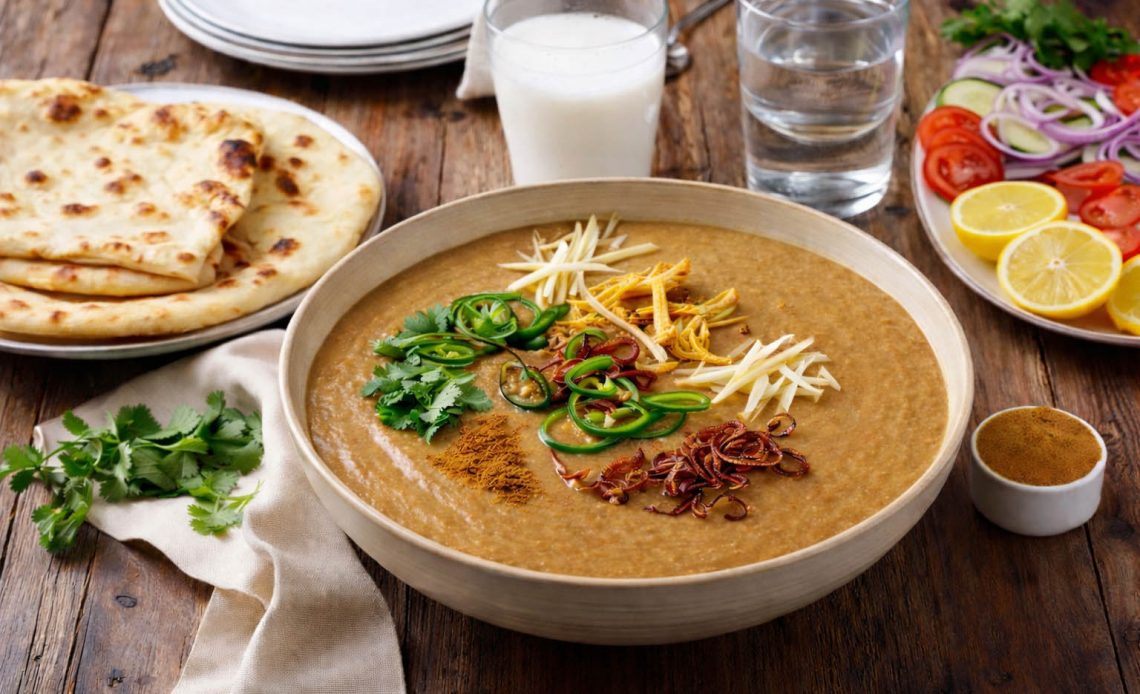
Traditional Lahori chicken haleem served with naan bread, fresh salad, lemon, and lassi on a rustic table.
ChickenMain DishesMeal Prep & Batch CookingPakistani & IndianRice & Grains

Chicken Haleem چکن/مرغ حلیم- मुर्ग हलीम

2 hours (or faster with pressure cooker) Cook
Scroll to recipe
  • Crispy Parmesan Garlic Aubergine (Zucchini) Sticks - Golden, garlicky, and impossibly crisp.
Click to rate this post!
[Total: 0 Average: 0]

This Lahori-style Chicken Haleem is slow food at its most deliberate—deeply savoury, softly spiced, and built layer by layer until meat, grain, and lentils dissolve into one silken whole. Unlike shortcut versions, this haleem is not blended smooth, nor rushed with shortcuts. It is worked by hand, patiently broken down using a wooden ghota, the way it has been done for generations in Lahore homes.

Chicken haleem is all about balance and technique, not complicated ingredients. The grains and daals are cooked until soft enough to mash, then blended into a smooth base that becomes the backbone of the dish. That’s what gives haleem its signature body — not cream, not shortcuts, just properly cooked lentils and grains that break down into a thick, cohesive texture.

The second half is the masala: onions fried crisp and golden, then ginger and garlic cooked until the raw edge disappears. Tomatoes bring depth, green chillies bring lift, and the spices do what they’re supposed to do — warm the dish, not overpower it. Once the chicken is tender and shredded back into the pot, the real haleem begins: low heat, steady stirring, and time. This is where the pot transforms from “stew” into proper haleem.

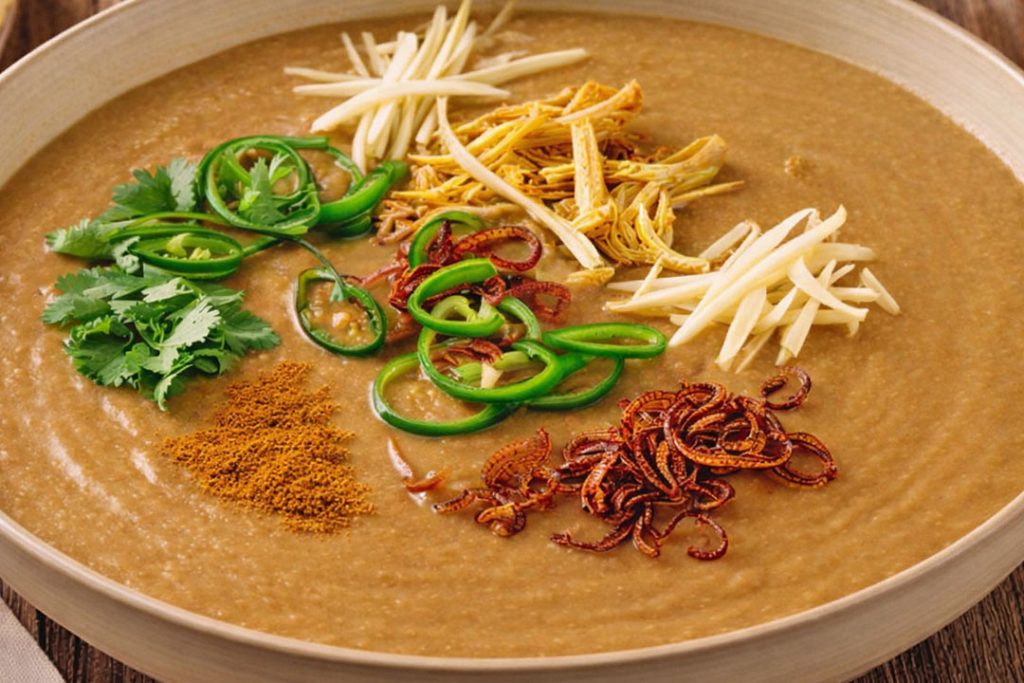
And the finishing matters more than people think. Adding half of your freshly ground spice mix at the end wakes everything up, while the garnish (lemon, chaat masala, ginger, coriander, chillies) turns each bowl into a full Lahori-style serving — tangy, spicy, and layered.

The Best Ingredients

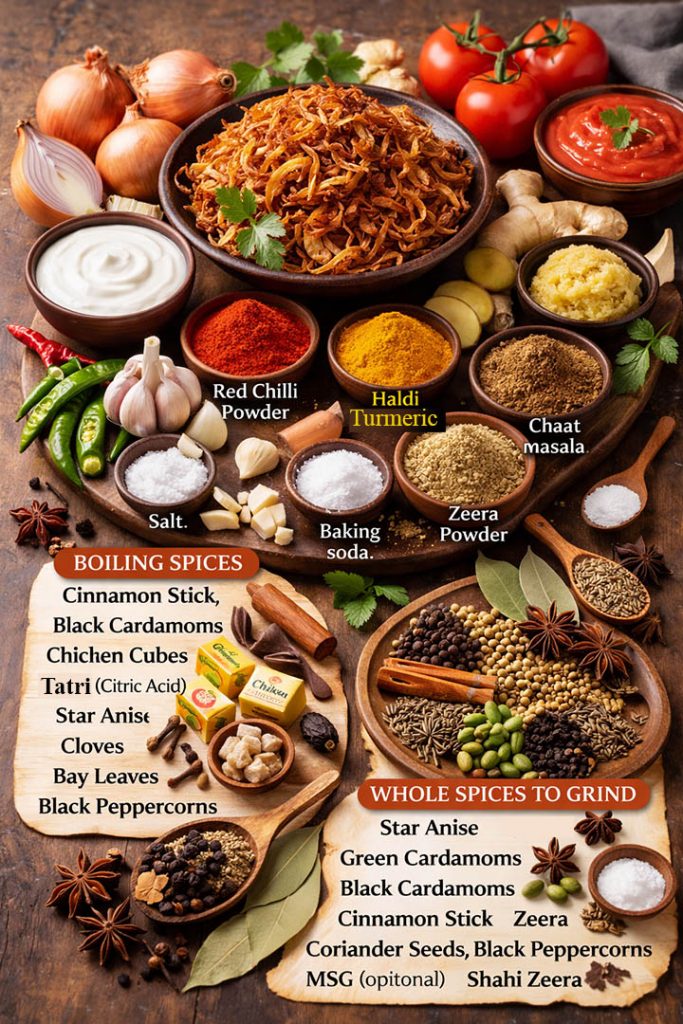
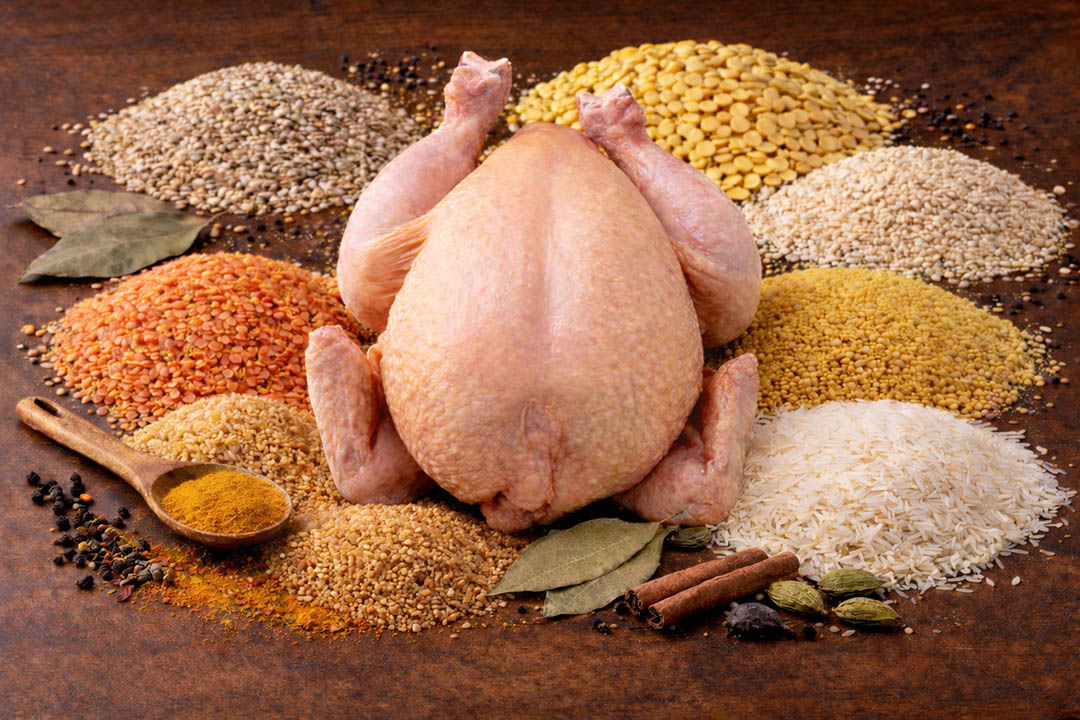
For the best result, your ingredient choices already do the heavy lifting. Pearl barley + bulgur + rice create body and elasticity, while the mix of chana daal, masoor, moong, and maash (urad) gives thickness and richness without the haleem tasting flat.

Your “boiling spices” are exactly right for traditional depth: cinnamon, black cardamom, cloves, bay, star anise, peppercorns — plus chicken cubes for that savoury backbone. The small touches (a little citric acid, a touch of baking soda, yogurt) help the mix soften and blend into that classic smoothness.


If you want real haleem texture, treat stirring like an ingredient — it’s what makes it thick, smooth, and properly “stretchy”.

👉 Despite its deeply layered flavour and rich texture, chicken haleem is surprisingly straightforward to make — a slow, gentle cooking process does most of the work, rewarding you with a comforting and incredibly delicious result.
  • Chicken (1kg): High-protein and filling, supports satiety and muscle maintenance
  • Mixed lentils + grains: High fibre, slow-release energy, and naturally thickening (no flour needed)
  • Garlic + ginger: Traditional digestion-supportive aromatics, also build depth without heaviness
  • Spice mix (whole-ground): Adds warmth and complexity without relying on excess salt
    (Always adapt seasoning levels to personal dietary advice.)
  • High-protein diets: Chicken + lentils make it very satisfying
  • Filling recovery meals: Soft texture, energy-dense, easy to portion and reheat
  • Family batch cooking: Freezes well and tastes even better the next day
  • Carbohydrates: High
  • Sugar: Low (no added sugar)
  • Fat: Moderate (adjustable)
  • Saturated fat: Low–Moderate (depends on oil/ghee used)
  • Sodium: Moderate–High (adjustable — stock cubes + salt)

Nutritional Highlights (Clear & Honest)

Per Serving (Approximate, assuming 8 servings):

  • Per Serving (Approximate, assuming 8 servings):
  • Calories: ~450–650 kcal
  • Protein: ~30–45 g
  • Carbohydrates: ~45–70 g
  • Fibre: High
  • Total Fat: ~10–22 g (depends on oil/ghee used)
  • Summary:
  • High protein • High fibre • Energy-dense • Very filling • Great for meal prep)
Not Ideal For (Without Modification)
  • Gluten-free diets: Bulgur is wheat (swap needed for GF)
  • Low-carb diets: Haleem is grain-forward by nature
  • Strict low-sodium diets: Reduce/omit stock cubes, control salt, finish with lemon for lift

1. How to Cook This Delectable Haleem

This recipe is straightforward, but a few habits make the difference between “nice stew” and real haleem:

  • Add half your ground spice mix in the meat, and half at the end for aromabhuna process ensures authentic flavour, rich texture, and perfectly gelatinous broth.
  • Cook grains/daals until they are fully soft (not just tender)
  • Blend or mash until smooth (grainy haleem = undercooked base)
  • Shred chicken fine and return it back into the pot
  • Cook low and slow, stirring often to build elastic texture

2. A Recipe That Always Pleases Everyone

Chicken haleem is one of those dishes that rewards you every time — it’s reliable, freezer-friendly, and deeply comforting. Once you understand the rhythm (soften → blend → combine → stir → finish), you can make a pot that tastes like it came from a proper kitchen, not a shortcut.

Looking for other savoury pasta recipes? Try these:

Chicken haleem is a rich, slow-cooked blend of tender chicken, lentils, and grains, simmered into a silky, deeply comforting dish layered with warming spices. Simple in ingredients yet rewarding in flavour, it’s a hearty, soul-satisfying meal where patience transforms everything into pure comfort.


Share
Chicken Haleem Recipe Card

Chicken Haleem Recipe Card

saquib_ahmed

This Traditional Chicken Haleem is one of Pakistan’s most beloved street foods and heritage dishes, celebrated for its deeply comforting flavour and rich, velvety texture. Slow-cooked chicken is gently simmered with a nourishing blend of lentils, grains, and pulses in a fragrant base of onions, garlic, ginger, and warming spices, creating a silky, hearty dish that is both wholesome and satisfying. Served hot with fried onions, fresh ginger, green chillies, lemon (optional), and a touch of garam masala, this iconic preparation delivers bold flavour, tender meat, and an authentic taste of traditional Pakistani comfort food.

  • 🍽️ Cuisine: Pakistani (Lahori)
  • 🥘 Course: Main / Hearty Bowl
  • 🍗 Category: Chicken
  • 🔥 Method: Slow-cooked + blended
  • Level: Medium (technique-based)
  • 💷 Cost Per Portion (UK Estimate): Approx. £1.10–£1.60 per portion, depending on chicken price and whether stock cubes/spices are pantry staples.
prep time
25 Minutes
cooking time
2 hours (or faster with pressure cooker)
servings
8
total time
~2 hours 25 minutes

Equipment

  • Large pot (heavy-bottomed preferred)

  • Second pot (or pressure cooker for chicken)

  • Wooden spoon (for stirring)

  • Hand blender or jug blender (for smoothing grains/daals)

  • Fine strainer (optional)

  • Knife + board

  • Bowls for garnish

Ingredients

  • GRAINS & LENTILS

  • 200g Pearl barley

  • 167g Bulgur wheat

  • 100g Rice

  • 200g Chana daal

  • 50g Masoor daal

  • 50g Moong daal

  • 50g Maash (urad) daal

  • MEAT & BASE

  • 1kg Chicken (meat)

  • 4 large Onions (about 500g), sliced and fried until crispy golden brown

  • 2 bulbs (3 tbsp) Garlic

  • 2 tbsp Ginger, pureed

  • 3 Tomatoes, skinned and pureed

  • 4–6 Green chillies, pureed

  • 2 tbsp Yogurt

  • ½ tsp Baking soda

  • Salt — to taste

  • 1 tbsp Red chilli powder

  • 1 heaped tsp Haldi (turmeric)

  • 1 tbsp Chaat masala

  • 1 tbsp Zeera powder

  • 1 tbsp Dhaniya powder

  • BOILING SPICES (Add to grains/daals while boiling)

  • 2 inch Cinnamon stick

  • 4 Black cardamoms

  • 3 Chicken cubes

  • ¼ tsp Tatri (citric acid)

  • 2 Star anise

  • 6 Cloves

  • 2 large Bay leaves

  • 1 tsp Black peppercorns

  • WHOLE SPICES TO GRIND (Use half during cooking, half at the end)

  • 2 Star anise

  • 6 Green cardamoms

  • 3 Black cardamoms

  • 1 inch Cinnamon stick

  • 2 tsp Zeera

  • 1 tbsp Coriander seeds

  • 1 tbsp Black peppercorns

  • 1 tsp MSG (optional)

  • ½ tsp Shahi zeera

  • GARNISH (LAHORI SERVING)

  • 1 large Fried browned onion (separated from the original 4 onions)

  • 2 × 3 inch Julienned ginger

  • Handful Fresh coriander, finely chopped

  • 2 tbsp Chaat masala

  • Wedges of 2 Lemons

  • 6–8 Sliced green chillies

Instructions

1
Step 1 — Cook Grains & Lentils
  1. Rinse all grains and lentils well.
  2. Add them to a large pot with plenty of water. Soak overnight
  3. Add the boiling spices (cinnamon, black cardamom, chicken cubes, citric acid, star anise, cloves, bay leaves, peppercorns).
  4. Boil until everything is very soft (not just tender). Top up water as needed.
  5. Blend lightly (or mash) until smooth. Set aside.
Step 2 — Prep the Ground Spice Mix
  1. Dry-grind the listed whole spices into a fine powder.
  2. Use half during chicken cooking, and reserve half for finishing at the end.
Step 3 — Cook Chicken (Masala Base)
  1. In a separate pot, fry sliced onions until crispy golden brown. Remove and reserve some for garnish.
  2. Add pureed ginger and garlic and cook until the raw smell fades.
  3. Add pureed tomatoes and cook until the masala looks cohesive.
  4. Add salt, red chilli powder, haldi, zeera powder, dhaniya powder, and 1/2 of the ground spice mix.
  5. Add chicken and cook until tender (pressure cooker speeds this up).
  6. Stir in yogurt, then add 1/2 tsp baking soda and cook 1–2 minutes (this helps soften and smooth the overall pot).
  7. Add the pureed green chillies near the end so the heat stays fresh.
Step 4 — Shred Chicken
  1. Remove chicken, shred finely, and return it back into the pot.
Step 5 — Combine & Build Texture
  1. Add the blended grain/daal mixture into the chicken pot.
  2. Cook on low heat for 45–60 minutes, stirring frequently.
  3. Beat/stir vigorously at intervals to develop that classic thick, elastic haleem texture.
Step 6 — Final Finish (Bhunna-Style Finish)
  1. Add 1 tbsp chaat masala into the pot.
  2. Add the remaining 1/2 ground spice mix right at the end for aroma.
  3. Adjust salt and thickness (add hot water only if needed).
🔥 Authentic Texture Tip (Very Important)
  • Haleem should be smooth — not grainy.
  • Continuous stirring is what creates the signature stretchy texture.
  • Use a wooden spoon or quick bursts of a hand blender for extra silkiness.
🌿 Serving Style (Lahori Way)

Serve hot topped with:

  • ✔ fried onions
  • ✔ ginger strips
  • ✔ lemon juice
  • ✔ green chillies
  • ✔ fresh coriander
  • ✔ chaat masala

Eat with naan or roti.

🍽️ What Goes Well With Haleem
  • Naan or tandoori roti
  • Sheermal (sweet bread)
  • Shami kebabs
  • Chapli kebabs
  • Fresh salad + onions
  • Kashmiri chai
2
🚫 Free From
  • Nut-free (no nuts used)
⚠️ Allergen Information (Standardised Base)

This recipe may contain allergens depending on ingredient sourcing (especially stock cubes and spice handling).

Contains
  • Gluten (bulgur wheat)
  • Dairy (yogurt)
May Contain (Depending on Ingredients & Kitchen Environment)
  • Celery (often present in stock cubes)
  • Mustard (possible in commercial mixes)
  • Soy (possible in stock cube flavourings)
Does NOT Intentionally Contain
  • Eggs
  • Fish
  • Shellfish
  • Sesame

Allergen note: Always check stock cube and chaat masala labels if cooking for someone with severe allergies.

3

🔒 Safety & Kitchen Practice (Mandatory)

Food Safety
  • Cook chicken thoroughly to an internal temperature of 75°C / 165°F.
  • Use a separate chopping board for raw poultry.
  • Wash hands, utensils, and surfaces thoroughly after handling raw chicken.
  • Keep haleem hot while serving; do not leave out for more than 2 hours.
Cookware Safety
  • Use a heavy-bottomed pot to prevent sticking and scorching.
  • Stir regularly — haleem thickens and can catch quickly at the base.
  • If using a blender, cool slightly and do not seal hot steam tightly.
General Kitchen Safety
  • Stir carefully to avoid splashes — thick haleem can bubble and spit.
  • Keep children away from the pot during boiling and stirring.

🧊 Food Safety & Storage Instructions — Haleem

Cooked Haleem
  • Cool within 2 hours, then refrigerate at 0–4°C → use within 3–4 days.
  • Freeze in portions at −18°C → best quality up to 3 months.
Reheating
  • Reheat thoroughly to 75°C or higher.
  • Reheat once only.
  • Add a splash of hot water while reheating if it thickens.
Discard If
  • Sour smell or off odour
  • Unusual bubbling/fermented smell after refrigeration
  • Sticky/sour change that wasn’t present when cooked
Storage Tips
  • Freeze in meal-sized tubs and label with the date.
  • Haleem often tastes even better the next day as flavours settle.

Notes

  • Do not stop the grains early — haleem must be fully softened before blending.
  • If the texture feels grainy, it needs more cooking or a smoother blend.
  • Reserve half the ground spice mix for the end — it gives the signature aroma.
  • Haleem thickens as it cools — adjust with hot water while reheating.
💡 Special Tips
  • Stirring is not optional — it builds the stretchy texture.
  • Low heat wins — fast heat risks burning the base.
  • Finish with lemon + chaat masala for the true Lahori bite.

Leave a Reply

Your email address will not be published. Required fields are marked *